Responsible AI Use: A Call to Reflection and Action

To watch / listen to the recording access the KCL media pages here

Nb. The summary below was generated from the transcript via Claude with a prompt focussing on the issues highlighted by Dr Bentley.

As AI continues to permeate various aspects of our lives, it is crucial to engage with its responsible use and consider the broader social and ethical implications. In this discussion (the fift in King’s Academy series: AI Conversations) , Dr Caitlin Bentley, a lecturer in AI Education at King’s College London, highlighted several critical issues surrounding the responsible adoption of AI technologies.

Privatisation and Commercialisation of AI
One of the major concerns raised by Dr Bentley is the rapid privatisation and commercialisation of AI technologies. With large technology companies capturing much of the technological infrastructure, driven by a surveillance-driven business model, there is a risk of solidifying the position of a few dominant players. This could lead to a lack of diversity and potential biases in AI systems.

Language Representation and Preservation
Another important issue highlighted is the impact of AI on less-used or less-resourced languages. Dr Bentley emphasised the need to monitor and ensure that AI tools do not inadvertently accelerate the disappearance of linguistic diversity. Initiatives aimed at preserving and representing these languages in AI systems are crucial.

Academic Integrity and Meaningful Learning
While the focus on academic integrity concerning AI tools like large language models is valid, Dr Bentley suggests that it might also indicate underlying issues within educational programmes. If students feel the need to turn to AI for assistance, it could signify a lack of meaningful engagement or relevance in the learning experience. Educators should reflect on creating more engaging and relevant curricula.

Responsible Use and Social Justice
Despite the potential challenges, Dr Bentley firmly believes that AI can be used for social good and to advance social justice. She highlighted examples of students using AI to create culturally relevant learning materials, assist insulin pump users, and develop multidisciplinary workshops on AI and sustainable development.

Call to Action: Reflection, Action Planning, and Research
To positively and responsibly engage with AI, Dr Bentley recommends a process of reflection, action planning, and research. This includes:

  • Engaging with communities and considering the impacts of AI on society.
  • Developing personal ethical stands and understanding one’s power to influence change.
  • Collaborating with others who share similar interests in driving positive and responsible AI use.
  • Utilising toolkits and resources (Dr Bentley is working on building toolkits for reflection, expected to be available by August)

UKRI Responsible Artificial Intelligence UK (RAI UK) programme.

    Watch/ listen to the rest of the conversations here

    BAAB Workshop: Gen AI- The Implications for Teaching and Assessment

    A Summary of the transcript-first drafted via Google Gemini , prompted and edited by Martin Compton

    The British Acupuncture Accreditation Board (BAAB) recently hosted a workshop on the implications of AI with a focus on generative AI tools like ChatGPT for teaching and assessment. With Dr Vivien Shaw from BAAB who designed and led the breakout element of the session, I was invited to share my thoughts on this rapidly evolving landscape, and it was a fantastic opportunity to engage with acupuncture/ Chinese Traditional Medicine educators and practitioners.

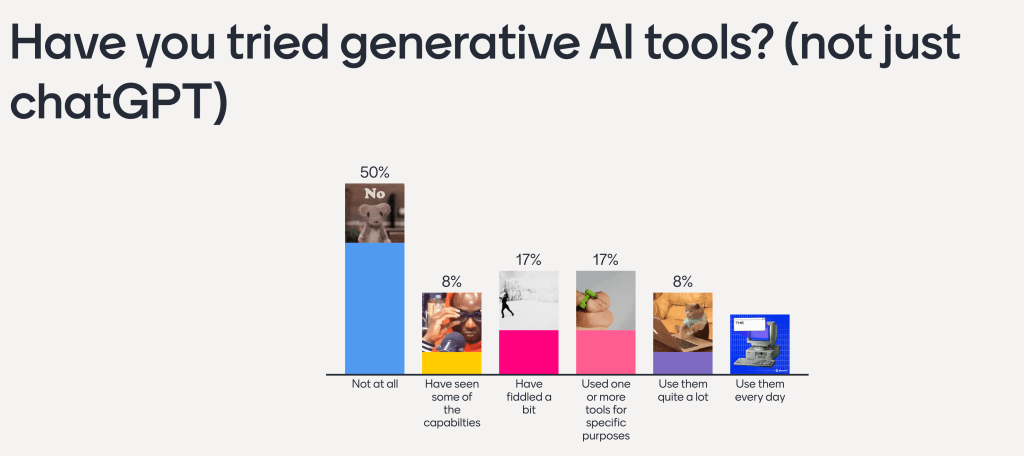
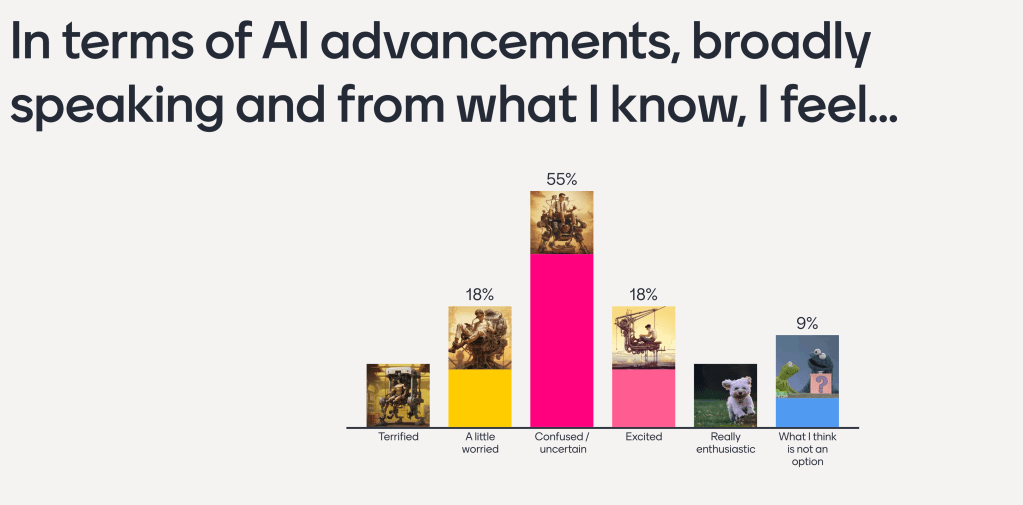
    We started by noting the fact that the majority of attendees have had little or no experience using these tools and most were concerned:

    Key Points

    After a few defintions and live demos the key points I made were:

    • AI is Bigger Than Generative AI: While generative AI tools like ChatGPT have taken the spotlight, it’s crucial to remember that artificial intelligence encompasses a much broader spectrum of technologies.
    • Generative AI is a Black Box: Even the developers of these tools are often surprised by their capabilities and applications. This unpredictability presents both challenges and opportunities.
    • The Human Must Remain in the Loop: AI should augment, not replace, human expertise. The “poetry” and nuance of human intelligence are irreplaceable.
    • Scepticism is Essential: Don’t trust everything AI produces. Critical thinking and verification of information are more important than ever.
    • AI is Constantly Improving: The capabilities of AI tools are evolving at a breakneck pace. What seems impossible today might be commonplace tomorrow.

    Embracing the Opportunities and Addressing the Threats

    The workshop highlighted the need for educators to lean into AI, understand its potential, and exploit its capabilities where appropriate. We also discussed the importance of adapting our teaching and assessment methods to this new reality.

    In the workshop I shared an AI generated summary of an article by Saffron Huang on ‘The surprising synergy between acupuncture and AI

    and a A Chinese Medicine custom GPT which was critiqued by the group

    Breakout Sessions: Putting AI to the Test

    To get a hands-on feel for AI’s impact, we divided into breakout groups and tackled some standard acupuncture exam questions using ChatGPT and other AI tools. The results were both impressive and concerning.

    • Group 1: Case History: The AI-generated responses were generic and lacked the nuance and depth expected from a student.
    • Group 2: Reflective Task: The AI produced “marshmallow blurb” – responses that sounded good but lacked substance or specific details.
    • Group 3: PowerPoint Presentation: While the AI-generated presentation was a decent starting point, it lacked the specifics and critical analysis required by the assignment.

    It was noted that these outputs should not mask the potential for labour saving, for getting something down as a start or the possibilites when multi-shot prompting (iterating).

    The Road Ahead

    The workshop sparked lively discussions about the future of teaching and assessment in the age of AI. Some key questions that emerged:

    • How can we ensure that students are truly learning and not just relying on AI to generate answers?
    • What are the ethical implications of using AI in education?
    • How can we adapt our assessments to maintain their validity and relevance?

    This will all take work but, as a starting point and even if you are blown away by the tutoring demo from Sal Khan /GPT 4o this week, value human connecton and interaction at all times. Neither dismiss out of hand or unthinkingly accept change for its own sake. Transformation is possible with these new tech because these AI are powerful tools, but it’s up to us to use them responsibly and ethically and to grow our understanding through experimentation and dialogue. We need to engage with the opportunities presented while remaining vigilant about the potential threats.