Whilst some (many) academic staff and students voice valid and expansive concerns about the use of or focus on Artificial intelligence in education I find myself (finally, perhaps, and later in life) much more pragmatic. We hear the loud voices and I applaud many acts of resistance but we cannot ignore the ‘explosive increase’ in AI use by students. It’s here and that is one driver. More positive drivers to change might be visible trends and future predictions in the global employment landscape and the affordances in terms of data analytics and medical diagnostics (for example) that more widely defined AI promises. As I keep saying this doesn’t mean we need to rush to embrace anything nor does it imply that educators must become computer scientists overnight. But it does mean something has to give and, rather than (something else I have been saying for a long time) knee-jerk ‘everyone back in the exam halls’ type responses, it’s clear we need to move a wee bit faster in the names of credibility (of the education and the bits of paper we dish out at the end of it) as well as the value to the students of what we are teaching and , perhaps more controversially I suppose, how we teach and assess them.

Over the past months, I’ve been working with colleagues to think through what AI’s presence means for curriculum transformation. In discussions with colleagues at King’s most recently, three interconnected areas keep surfacing and this is my effort to set them out:
Content and Disciplinary Shifts
We need to reflect on not just what might we add, but what can we subtract or reweight. The core question becomes: How is AI reshaping knowledge and practice in this discipline, and how should our curricula respond?
This isn’t about inserting generic “AI in Society” modules everywhere. It’s about recognising discipline-specific shifts and preparing students to work with, and critically appraise/ engage with new tech, approaches, systems and idea (and the impacts consequent of implementation). Update 11th June 2025: My colleague, Dr Charlotte Haberstroh, pointed out on reading this that there is an additional important dimension to this and I agree. She suggests we need to find a way to enable students to question and make connections explicitly: ‘how does my disciplinary knowledge help me (the student) make sense of what’s happening, how can it inform my analysis of causes/consequences of how AI is being embedded into our society (within the part that I aim to contribute to in the future / participate in as responsible citizen). Examples she suggested: In Law it could be around how it alters the meaning of intellectual property, in HR it’s going to be about AI replacing workers (or not) and/or the business model of the tech firms driving these changes. In history it’s perhaps how have we adopted technologies in the past and how does that help us understand what we are doing now.
Some additional examples of how AI as content crosses all disciplines:
- Law: AI-powered legal research and contract review tools (e.g. Harvey) are changing the role of administration in law firms and the roles of junior solicitors.
- Medicine: Diagnostic imaging is increasingly supported by machine learning, shifting the emphasis away from manual pattern recognition towards interpretation, communication, and ethical judgement.
- Geography: Environmental modelling uses real-time AI data analytics, reshaping how students understand climate systems.
- History and Linguistics: Machine learning is enabling large-scale text and language analysis, accelerating discovery while raising questions about authorship, interpretation, and cultural nuance.
Assessment Integrity and Innovation
Much of the current debate focuses on the security of assessment in the age of AI. That matters a lot of course but if it drives all our thinking and feel it is still the dominant narrative in HE spaces, we will double down on distrust, always default to suspicion and restriction rather than our starting point being designing for creativity, authenticity and inclusivity.
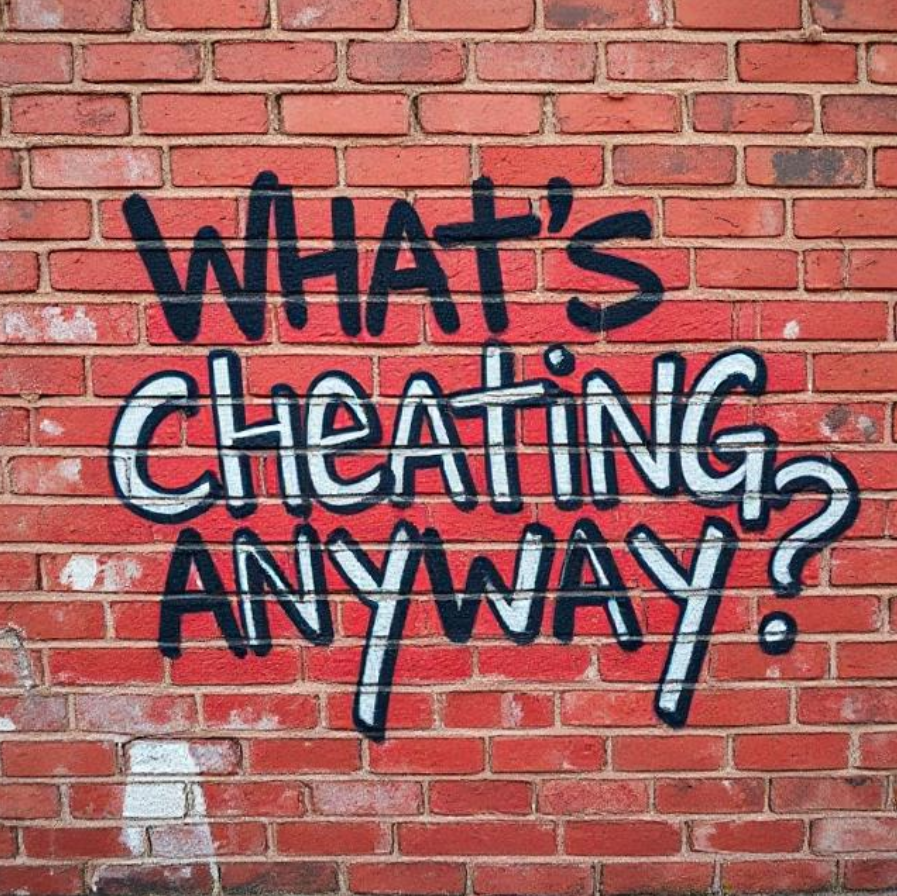
First shift needs to be moving from ‘how do we catch cheating?”’to ‘Where and how can we ‘catch’ learning?’ as well as ‘how do we design assessments that AI can’t meaningfully complete without student learning?’ Does this mean redefining ‘assessment’ beyond the narrow ‘evaluative ‘ definition we tend to elevate? Probably, yes.
Risk is real, inappropriate/ foolish/ unacceptable …even malicious use of AI is a real thing too. So, robustness by design is important too: iterative, multi-stage tasks; oral components; personalised data sets; critical reflection. All are possible without reverting to closed-book exams. These have a place but are no panacea.
Examples of AI-shaping assessment and design:
- Engineering: Generative design tools help students simulate multiple prototypes or to visualise diverse possibilities.
- Business and Accounting: AI now handles significant compliance and tax automation
- Computer Science / Coding: With tools like GitHub Copilot generating working code from natural language, assessment may need to focus more on code comprehension, debugging, testing, and ethical evaluation and/ or problem-based and collective (and interdisciplinary) tasks.
AI Integration & Critical Literacies
Students need access to AI tools; They need choice (this will be an increasingly big hurdle to navigate), they need structured opportunities to critique and reflect on their use. This means building critical AI literacy into our programmes or, minimally, the extra-curricular space, not as a bolt-on, but as an embedded activity. Given what I set out above, this will need nuancing to a disciplinary context. It’s happening in pockets but I would argue needs more investment and an upping of the pace- given the ongoing crises in UK HE (if not globally) it’s easy to see why this may not be seen as a priority.
I think we need to do the following for all students. What do you think?
- Critical AI literacy (what it is, how it works (and where it doesn’t), all the mess in connotes)
- Aligned with better Information/digital literacy (how to verify, attribute, trace and reflect on outputs- and triangulate)
- Assessment and feedback literacy (how to judge what’s been learned, and how it’s being measured)
Some examples of where the discipline needs nuance and separate focus and why it is so complex:
- English Literature/ History/ Politics: Is the essay dead? Students can prompt ChatGPT to generate essays but how are they generating passable essays when so much of the critique is about the banality of homogenised outputs and lack of anything resembling critical depth? How can we (in a context were anonymous submission is the default) maintain value in something deemed so utterly central to humanities and social science study?
- Medical and Nursing education:I often feel observed clinical examinations hold a potential template for wider adoption in non medical disciplines. And AI simulation tools offer lifelike decision-making environments so we are seeing increasing exploration of the potentials here: the literacy lies in knowing what AI can support and what it cannot do, and how to bridge that gap.Who learns this? Where is the time to do it? How are decision made about which tools to trail or purchase?
Where to Start: Prompting thoughtful change
These three areas are best explored collectively, in programme teams, curriculum working groups or assessment review/ module review teams. I’d suggest to begin with these teams need to discuss and then move on from there.
- Where have you designed assessments that acknowledge AI in terms of the content taught? What might you need to modify looking ahead?
(e.g. updated disciplinary knowledge, methodological changes, professional practice) - Have you modified assessments where vulnerability is a concern? Have you drawn on positive reasons for change (eg scholarship in effective assessment design)? (e.g. risk of generative AI substitution, over-reliance on closed tasks, integrity challenges)
- Have you designed or planned assessments that incorporate, develop or even fully embed AI use?
(e.g. requiring students to use, reflect on or critique AI outputs as part of their task)
I do not think this is AI evangelism though I do accept that some will see it as such because I do believe that engagement is necessary and actually an ethical responsibility to our students. That’s a tough sell when some of those students are decrying anything with ‘AI’ in it as inherently and solely evil. I’m not trying to win hearts and minds to embrace anything other than that these tech need much broader definition and understanding and from that we may critique and evolve.






 HEducationist